White Home Font: Sweet, Friendly Display Type for Handmade Goods
If you've ever spent hours tweaking a wedding invitation layout only to realize the font feels too stiff—or too fussy—then White Home is the display font that quietly solves it. As someone who designs printable planner pages, hand-pours soy candles with custom labels, and sells SVG bundles for Cricut users, I’ve tested dozens of “friendly” fonts. White Home stands out because it’s genuinely warm without sacrificing clarity—and crucially, it cuts cleanly on my Silhouette Cameo and prints crisply at even 8pt on delicate kraft tags.
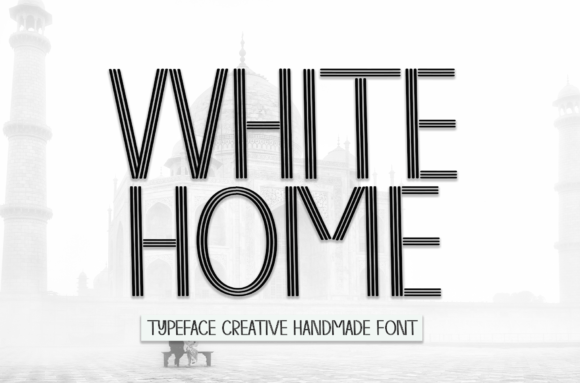
White Home is a fresh, neatly drawn display font with soft curves, open letterforms, and just enough personality to feel handmade—without veering into overly decorative territory. It’s not a script, but it carries that approachable, human touch. Think of it as the typographic equivalent of a linen napkin folded with care: simple, intentional, and quietly elegant. The lowercase “a” and “g” have gentle, rounded shapes; the uppercase letters sit tall and confident but never shout. That balance makes it ideal for products where charm and legibility must coexist—like boutique soap labels, baby shower banners, or printable wall art sold as digital downloads.
I use White Home most often for short, high-impact text: product names on apothecary jars, welcome signs for weddings, shop name decals on mason jars, and headline text in Canva templates for Etsy sellers. It’s not built for body copy—but that’s exactly why it shines as a display font. Its spacing is generous, its x-height generous, and its contrast subtle enough to hold up well when resized down for 1.5-inch sticker labels or scaled up for a 24x36" farmhouse-style sign. On physical prints, it reads beautifully on both matte cardstock and glossy sticker paper—no ink bleed or fuzzy edges, even with tight kerning.
For crafters using cutting machines, here’s what matters: White Home imports cleanly into Cricut Design Space and Silhouette Studio. No missing glyphs, no broken outlines. I’ve cut it from vinyl at 0.75" height with zero issues—even with the lowercase “e” and “s,” which sometimes trip up less-optimized fonts. For small-format stickers (think 1" round labels for tea tins), I keep text to three words max and avoid all-lowercase settings. Uppercase or title case works better at tiny sizes, and the font’s natural rhythm keeps things readable without needing manual tracking adjustments.
Where White Home truly elevates handmade goods is in perceived quality. A candle labeled in a generic sans serif says “functional.” One labeled in White Home says “thoughtfully made.” Customers notice that difference—even if they can’t name why. It adds emotional resonance to packaging: a birthday card feels joyful, a wedding welcome board feels personal, a seasonal mug design feels cozy and intentional. That consistency builds brand identity across your product line, whether you’re selling physical goods on Etsy or digital printables on Payhip.
Pairing White Home thoughtfully expands its usefulness. I often combine it with a clean, neutral sans serif—like Montserrat or Inter—for body text or pricing details. This creates visual hierarchy without competing energy. For greeting cards or invitations, I’ll layer it over a delicate handwritten font (like *Lavanderia* or *Belleza*) for names or dates—White Home handles the headline, while the script adds intimacy. Avoid pairing it with other high-contrast display fonts; its sweetness gets lost. And skip dense serifs—it’s not a formal typeface, so don’t force formality onto it.
In practice, here’s how it shows up in my shop: the “Honey Lavender” candle label uses White Home for the scent name above a minimalist botanical line drawing; my printable “Baby’s First Christmas” ornament template centers the year in White Home over a soft watercolor background; and my best-selling SVG bundle for farmhouse kitchen signs features White Home in three size variations—perfect for layering on wood slices or chalkboard panels. It also works beautifully on fabric transfers for tote bags and onesies, especially when paired with a light-weight outline stroke in design software.
White Home includes standard OpenType features—basic ligatures and stylistic alternates—which add subtle polish to digital mockups and printed proofs. While it doesn’t include extensive multilingual support or extended Cyrillic characters, it covers Western European languages thoroughly, making it safe for shops serving US, UK, Canadian, and Australian customers. File formats are standard: OTF and TTF, fully compatible with Adobe Creative Cloud, Affinity apps, Canva, and free tools like Inkscape.
One non-negotiable for craft sellers: always verify the commercial license. White Home is licensed for physical product use—including labels, stickers, apparel, and signage—as well as digital downloads like SVG files, Canva templates, and printable planners. You can embed it in client work and sell end products without additional fees. But double-check the license before uploading to POD platforms or bundling into editable design kits. Reputable font sellers clearly state usage rights—and with White Home, you’re covered for the full scope of handmade business needs.
Whether you're designing a single holiday tag or building a cohesive suite of wedding stationery, White Home delivers that rare blend of friendliness and function. It doesn’t try to be everything—just the perfect, sweet, neat accent your handmade products deserve.